There is a quality of light that belongs only to the first hour. Before the day sets its tempo, the body still carries the residue of rest — muscles holding a different kind of quiet than what fatigue produces later. Morning stretching works with that quality, not against it. The mat laid out before coffee becomes less a performance space and more a listening instrument.
What the Body Carries Overnight
During sleep the connective tissue that surrounds and supports muscle fibres loses much of its working temperature. Fascia — the web of tissue that organises the body beneath the skin — thickens slightly with inactivity. The sensation familiar to most people as morning stiffness is this: tissue that has not yet been invited back into movement.
Research into myofascial behaviour published in journals of sport and movement science consistently notes that tissue responds to gradual temperature change more reliably than to sudden load. This is not a revelation — experienced practitioners have known it by feel for generations — but the documentation anchors intuition in something more transferable. A slow beginning is not timidity. It is attunement.
The orientation suggested here is therefore not one of achieving specific positions quickly. It is one of noticing: what holds tension today? Where does the range differ from yesterday? This noticing is itself the practice, before any formal pose begins.
The Architecture of a Morning Sequence
A morning flexibility routine does not need to be long. Observations from practitioners who have maintained consistent daily habits suggest that duration is less important than regularity, and regularity is more achievable when the routine fits naturally into the first waking period rather than competing with it.
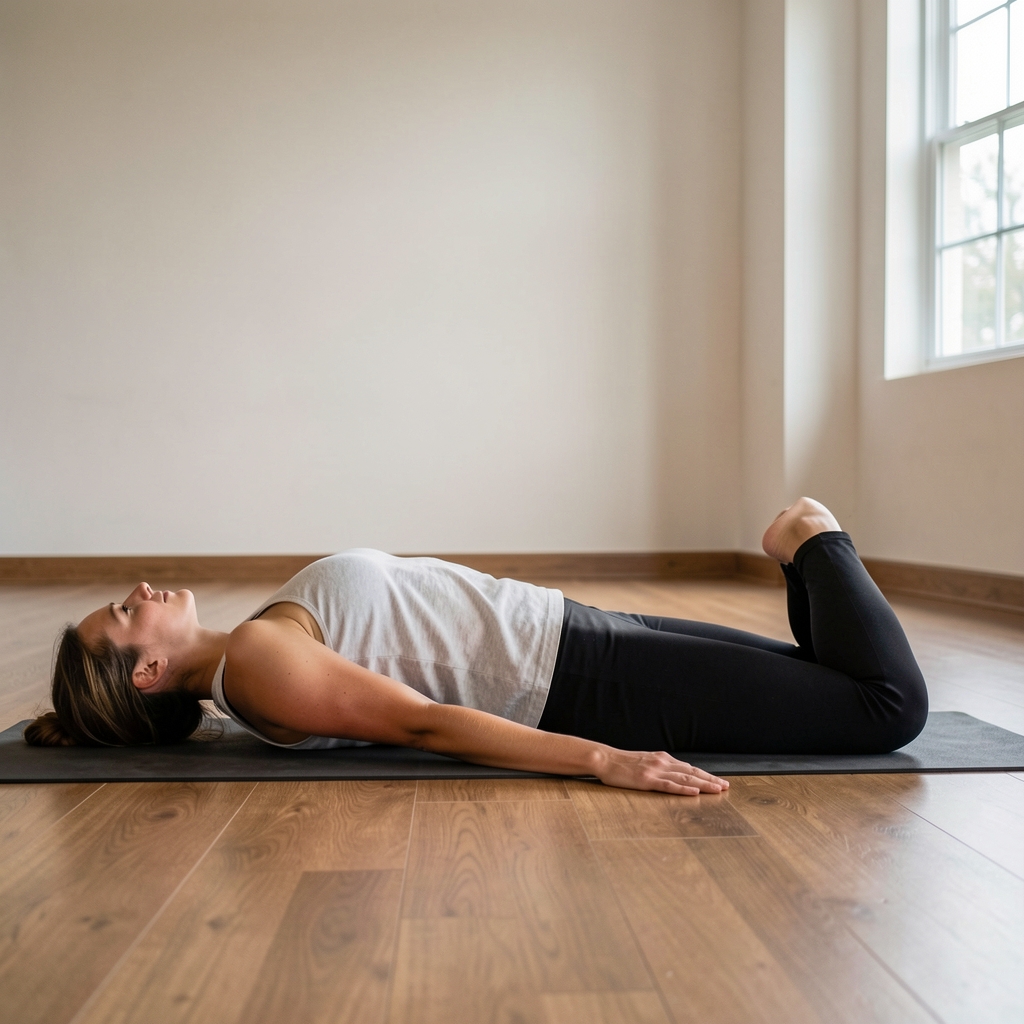
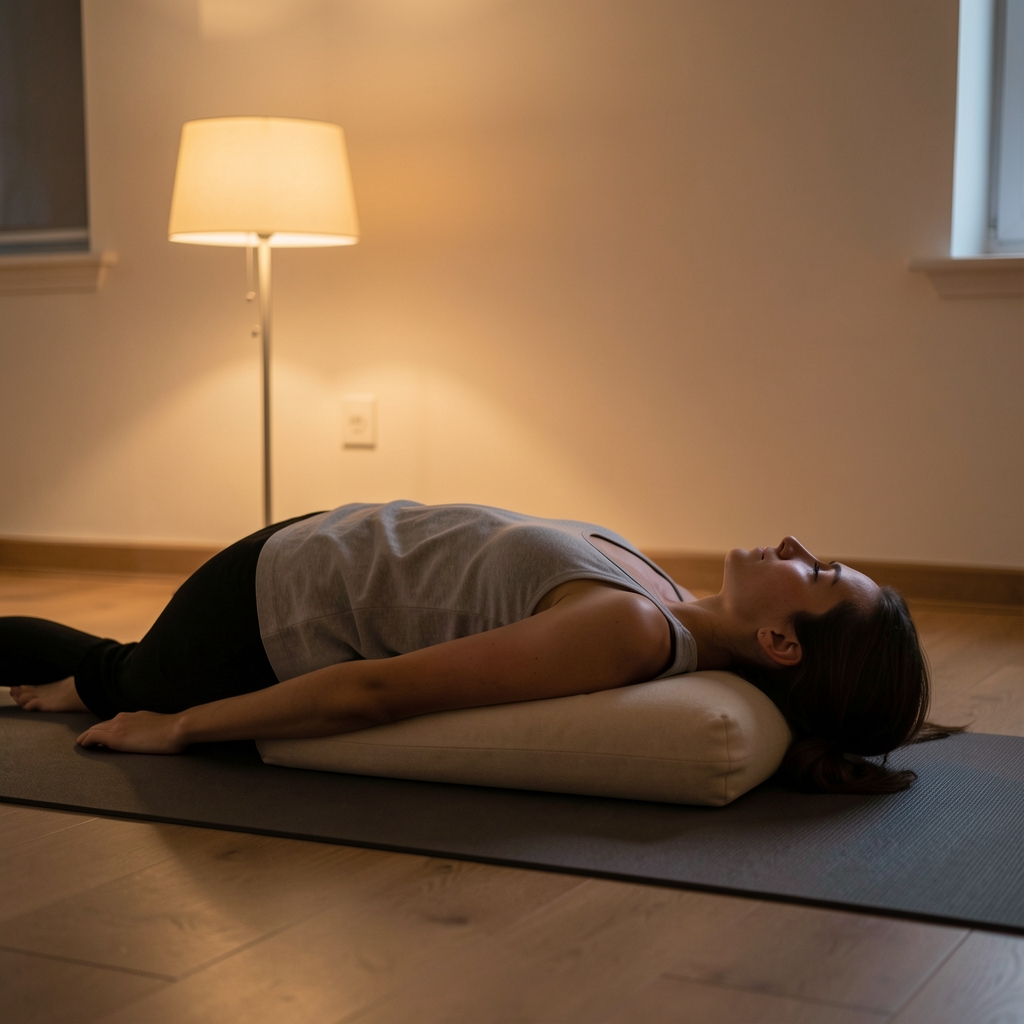
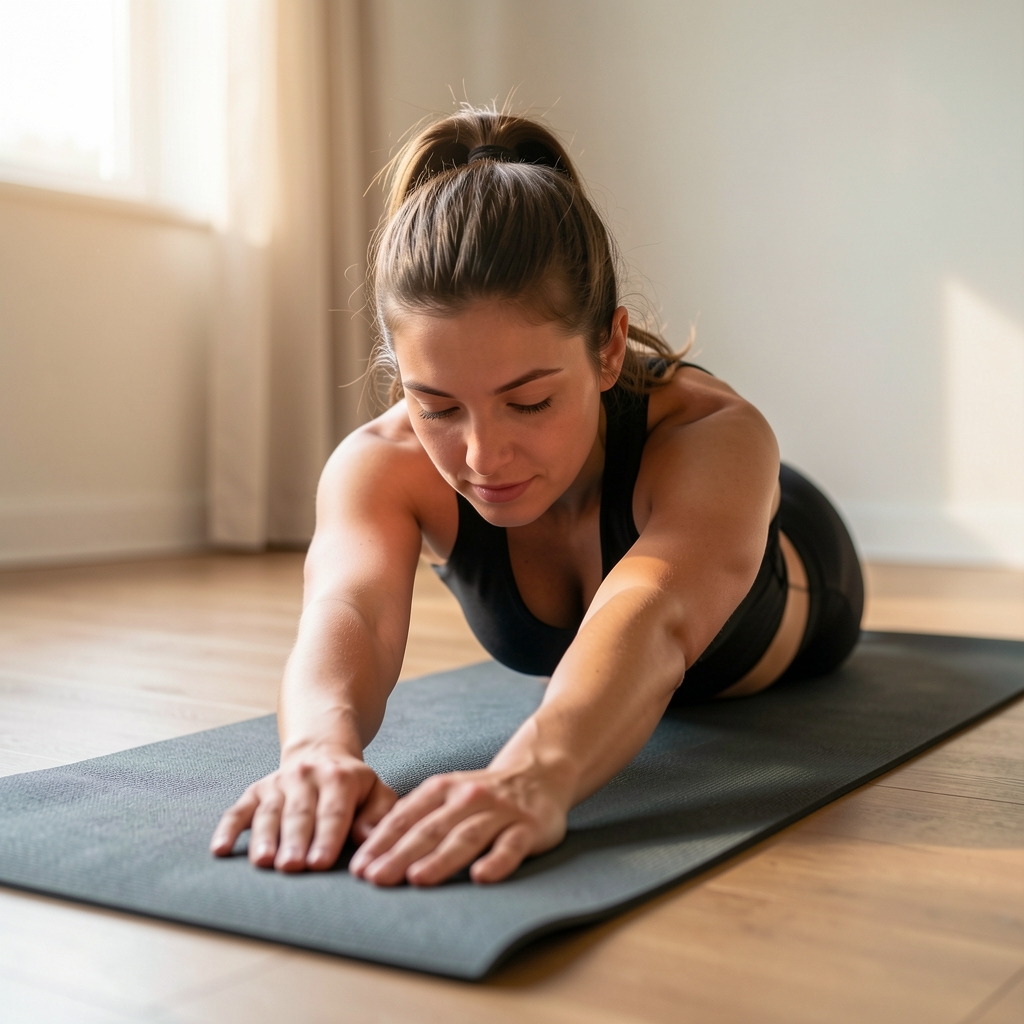
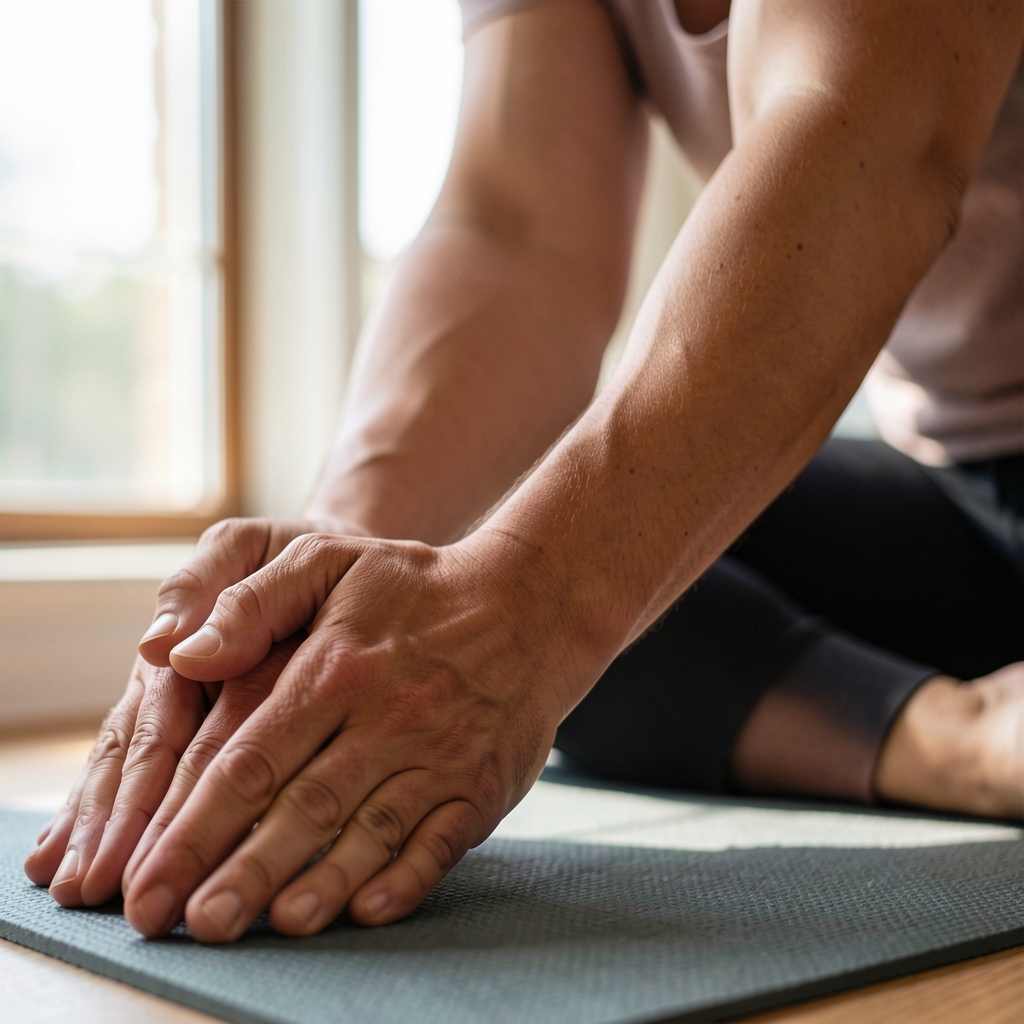
A structure that has proven sustainable across different experience levels tends to follow a loose progression: begin horizontal, work to seated, then to standing. This mirrors how the body naturally rises. Lying supine twists and knee-to-chest positions ease the lower back before the spine is asked to bear vertical load. Seated forward folds and hip circles continue the warming. Standing poses — if they appear at all in a morning sequence — arrive after the joints have been sufficiently prepared.
What this sequence resists is performance. The purpose is not to demonstrate what the body can do — which varies meaningfully from day to day — but to locate where it actually is. A morning practice conducted in this spirit serves as a daily calibration rather than a daily test.
Breath as Structural Cue
Practitioners of yoga across several traditions identify breath as the primary organising principle of movement. In a morning context, this observation carries practical weight: the breath begins naturally slower on waking, and this tempo can be used rather than overridden.
Timed exhalations — longer than inhalations — have been associated with activation of the parasympathetic branch of the autonomic nervous system. For movement practice, this translates into tissue that responds rather than guards. Moving on an exhalation, releasing a held position on a long breath out, is a technique that appears across mat traditions precisely because it works with physiology.
To build breath awareness into a morning routine does not require formal pranayama instruction. Three conscious breaths before beginning, and the habit of noting whether breath is held during difficult stretches, represent the entire technical requirement for most practitioners.
Key Observations — Morning Practice
- Tissue responds more reliably to gradual warming than to sudden load
- Duration matters less than daily consistency for flexibility development
- The horizontal-to-standing progression mirrors natural waking patterns
- Breath tempo on waking is naturally slower — a practical advantage for mat work
- Morning practice functions as calibration, not performance
What Consistency Produces Over Time
The most reliable outcome of a sustained morning stretching practice is not dramatic increases in range — though range can improve — but rather a change in relationship to the body's morning state. Practitioners who have maintained the habit for several months consistently report that the noticing becomes sharper. A tight hip, an unusually stiff shoulder, a subtle difference in balance: these observations begin arriving earlier and more precisely as the baseline of awareness sharpens with repeated use.
This is the deeper orientation that the title of this piece points toward. Flexibility, in the context of a balanced way of living, is not primarily a physical measurement. It is a habit of attention — a willingness to check in rather than override, to soften rather than push, to know where things actually are before deciding where to take them.
A morning practice maintained across seasons has a way of demonstrating this. The range on a cold winter morning differs from a warm August practice. The body after a long journey differs from the body after a restful weekend. Tracking these variations with curiosity rather than evaluation is, in the end, what a daily orientation toward flexibility actually looks like.
Practical Notes for Establishing the Routine
Several practical observations have emerged from practitioners who have built and maintained morning stretching habits in home environments — without access to studios, instructors, or equipment beyond a mat.
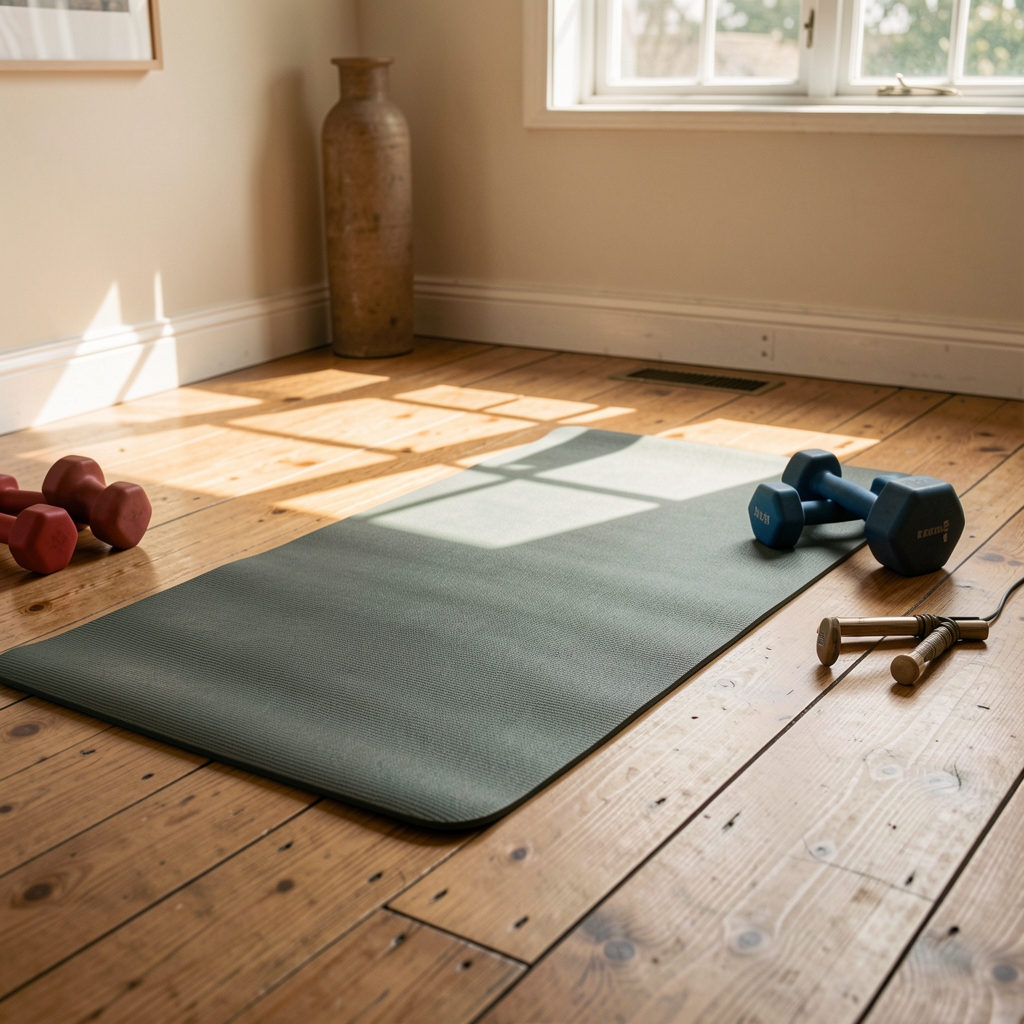
The mat location matters. Placing the mat in a position that it does not need to be fetched from — unrolled the evening before, waiting at the side of the bed — removes a small but real friction point in the early morning. The visual cue of the mat in place is itself a prompt.
The length of the initial commitment matters less than most people expect. A five-minute sequence practised every morning for six weeks produces more sustainable flexibility gains and stronger practice habits than a forty-minute session practised twice per month. The research on habit formation supports this clearly. Begin with less than seems necessary.
Temperature — of the room and of the practitioner — deserves note. Warmer conditions do support tissue pliability. On colder mornings, an additional layer kept on for the first few minutes, or the choice to begin with more dynamic movements rather than held stretches, compensates for what ambient warmth doesn't provide.
Morning practice, in the end, is less about what it produces and more about what it makes available. A few minutes of deliberate movement before the day's demands arrive does not transform the body in any dramatic sense. It establishes, quietly and repeatedly, that the body is a subject worth attending to. That orientation — carried forward into how the day is sat through, moved through, rested through — may be the most significant thing the morning mat offers.