The chair has become the dominant posture of working life. It was not designed with the hip joint in mind. Extended sitting — whether at a desk, during a commute, or in front of a screen in the evening — places the hip flexors in a shortened position for periods that the musculoskeletal system was not prepared for by evolution. This observation, now well-documented in movement science literature, opens a practical question: what does a consistent and accessible movement routine actually address?
How Prolonged Sitting Changes the Hip
The hip is a ball-and-socket joint capable of considerable range: flexion, extension, abduction, adduction, and rotation in both directions. In habitual seated posture, most of that range is unused. The hip sits close to ninety degrees of flexion for hours at a time while the joint's capacity for extension, external rotation, and abduction receives almost no stimulus.
What movement science has documented is that tissue adapts to habitual position. Hip flexors maintained in a shortened state for extended periods begin to lose length. The glutes — which are responsible for hip extension and stabilisation — experience reduced neural activation when the seated posture provides support that they would otherwise be engaged to create. This pattern of reduced activation has been described in research as a contributor to lower back load during activities of daily movement.
None of this is to suggest that sitting is uniformly damaging. The issue documented is one of duration and variety: a body that sits for nine hours and then engages in thirty minutes of vigorous movement has not necessarily compensated for the positional pattern of the preceding nine hours. Restorative hip work, delivered consistently in shorter doses throughout the day or as a dedicated daily practice, addresses the adaptation process more directly.
The Hip-Opening Sequence in Practice
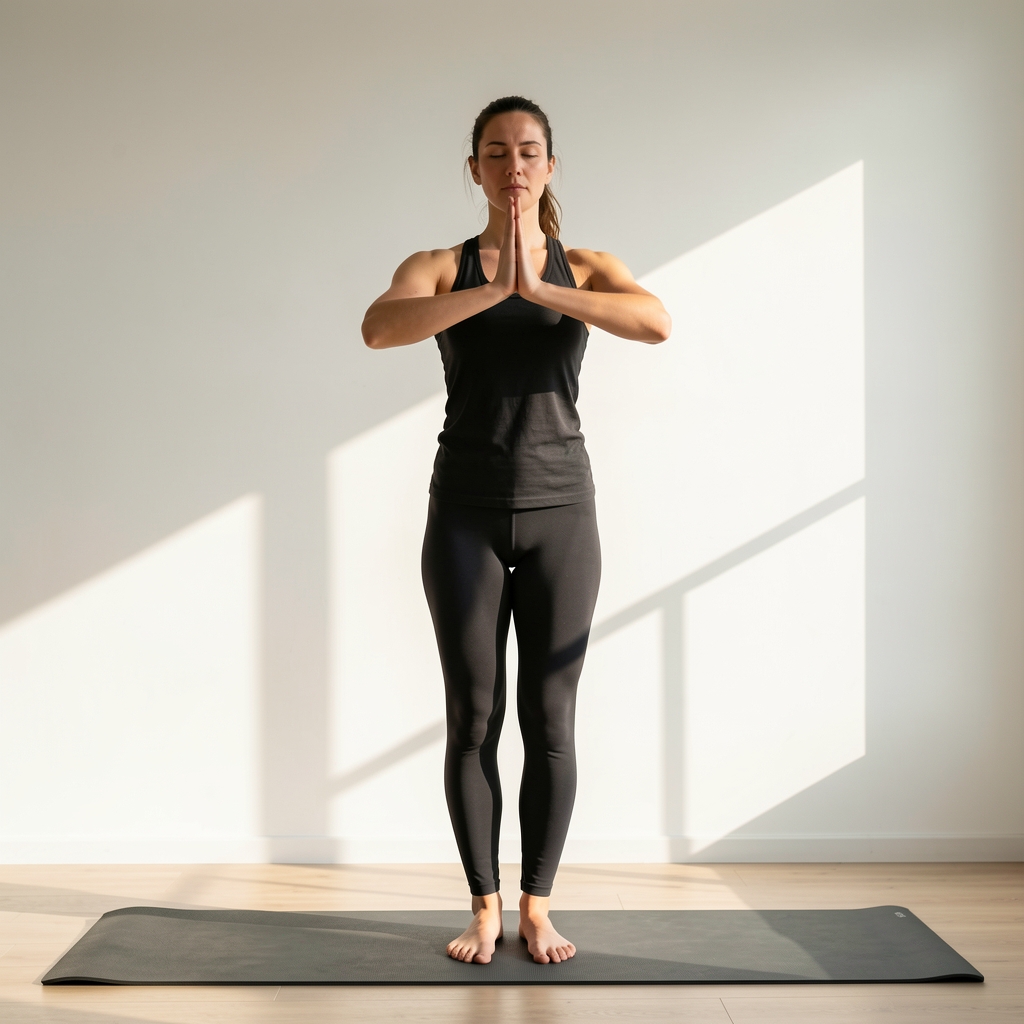
Hip-opening sequences, as the term is used in yoga practice, refer to postures that actively work the hip through ranges that seated posture deprioritises. The terminology does not describe a specific mechanism of the joint — it describes a category of practice orientation.
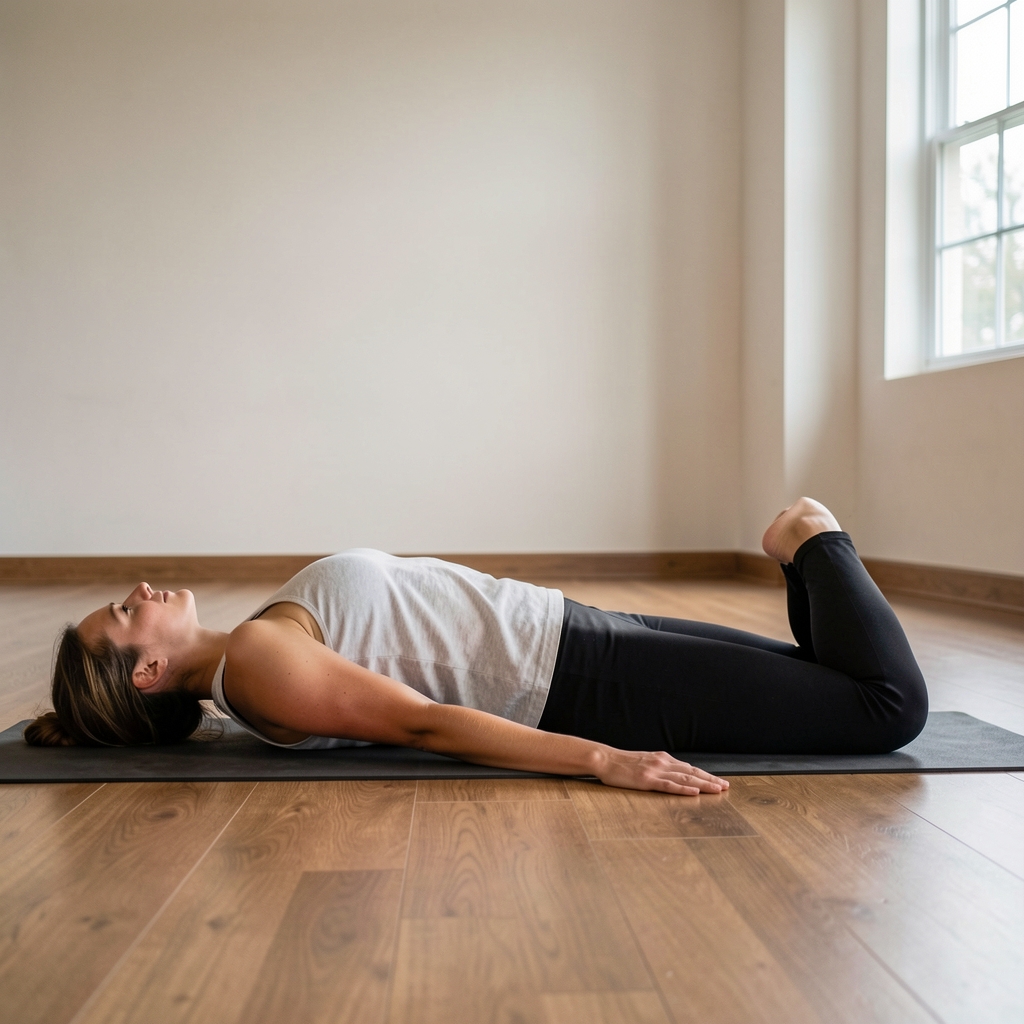
Postures commonly included in this category: low lunges and their variations (addressing hip flexor length), supine figure-four or half-pigeon (addressing external rotation and piriformis length), wide-legged forward folds (addressing adductor length and inner hip), and reclined bound angle pose (addressing combined flexion and abduction). Each addresses a different dimension of the hip's range.
What practitioners consistently note — and what movement research broadly supports — is that the benefit from these postures accumulates through regularity rather than intensity. A low lunge held for ninety seconds, practised five times per week, produces more measurable change in hip flexor length over three months than a deep pigeon pose held once per week until discomfort forces exit.
The session length required to address the hip meaningfully is smaller than many practitioners expect. Fifteen minutes of focused hip work, structured to move through the available directions of range, represents a complete routine for maintenance and gradual improvement. The primary variable is not the depth of the stretch but the consistency of the practice.
Key Observations — Hip Mobility Practice
- The hip has six degrees of movement; habitual sitting uses only one
- Hip flexors adapt to shortened positions; the process reverses with consistent lengthening
- Regularity of practice outperforms intensity of individual sessions
- Fifteen minutes of structured hip work constitutes a complete maintenance routine
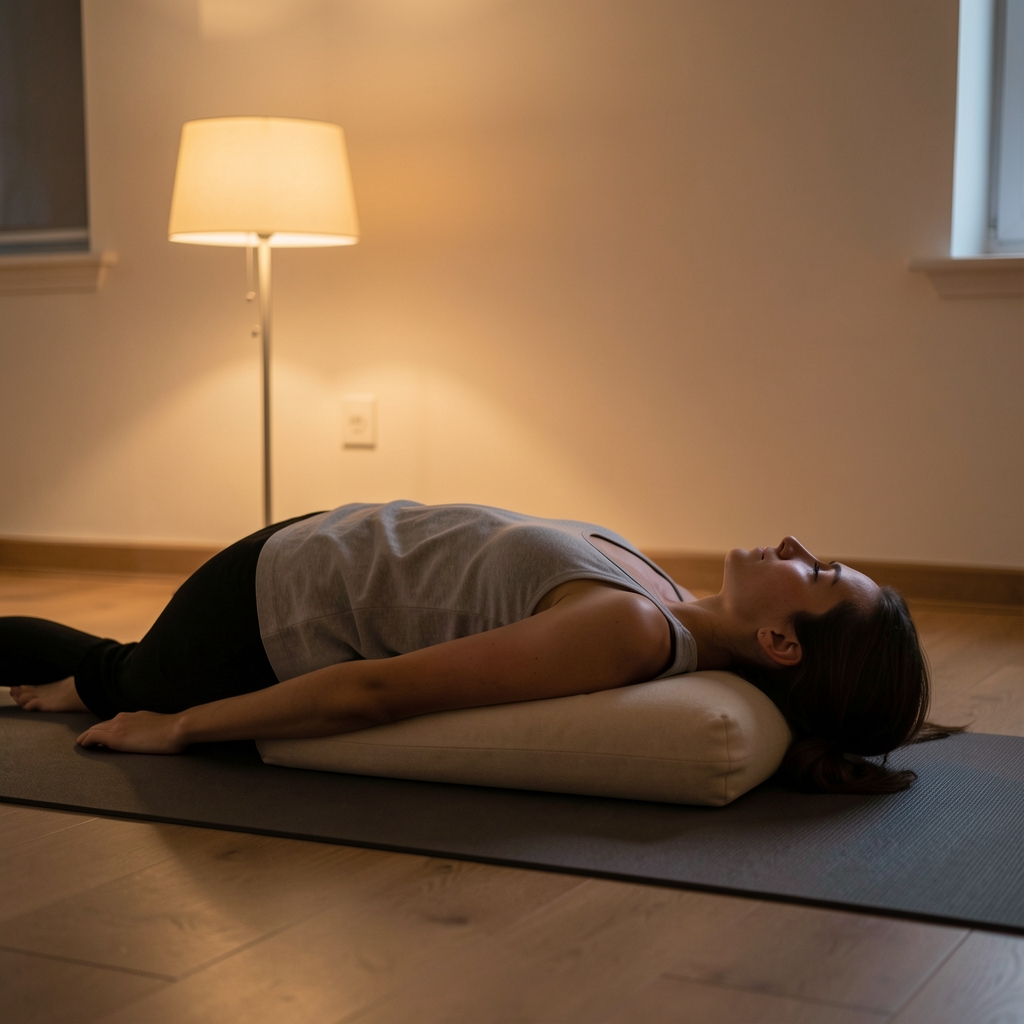
- Prop support (bolster, block, folded blanket) enables longer holds with less muscular effort
The Role of Prop Support
For practitioners new to hip-opening work, the most common difficulty is not inflexibility itself but the muscular effort required to maintain a posture long enough for the connective tissue to respond. A hip-opening stretch that demands continuous muscular engagement to hold does not allow the tissue the passive length it requires.
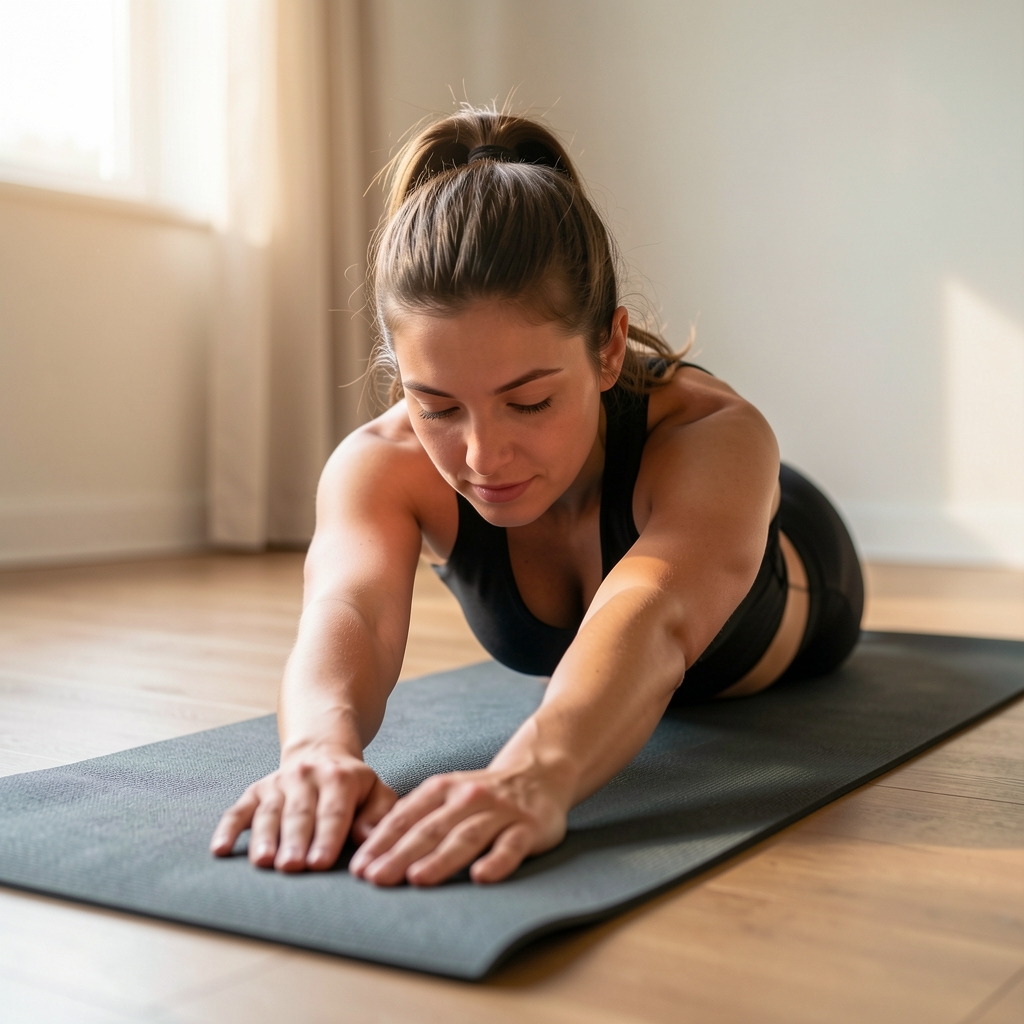
Props — a yoga block under the hip in pigeon pose, a folded blanket under the knees in reclined bound angle, a bolster beneath the chest in supported child's pose — solve this problem by providing the structural support that muscles would otherwise have to generate. The practitioner rests into the position rather than holding it, and longer holds become possible without discomfort.
The use of props in hip-opening practice is not a concession to limited range. It is the more sophisticated approach. Yin yoga — a style that specifically addresses connective tissue through long, supported holds — was developed partly on this insight. The principle applies regardless of whether the practitioner follows a formal yin sequence or simply incorporates a folded blanket into an otherwise dynamic morning routine.
Observation Notes: Three Months of Daily Hip Work
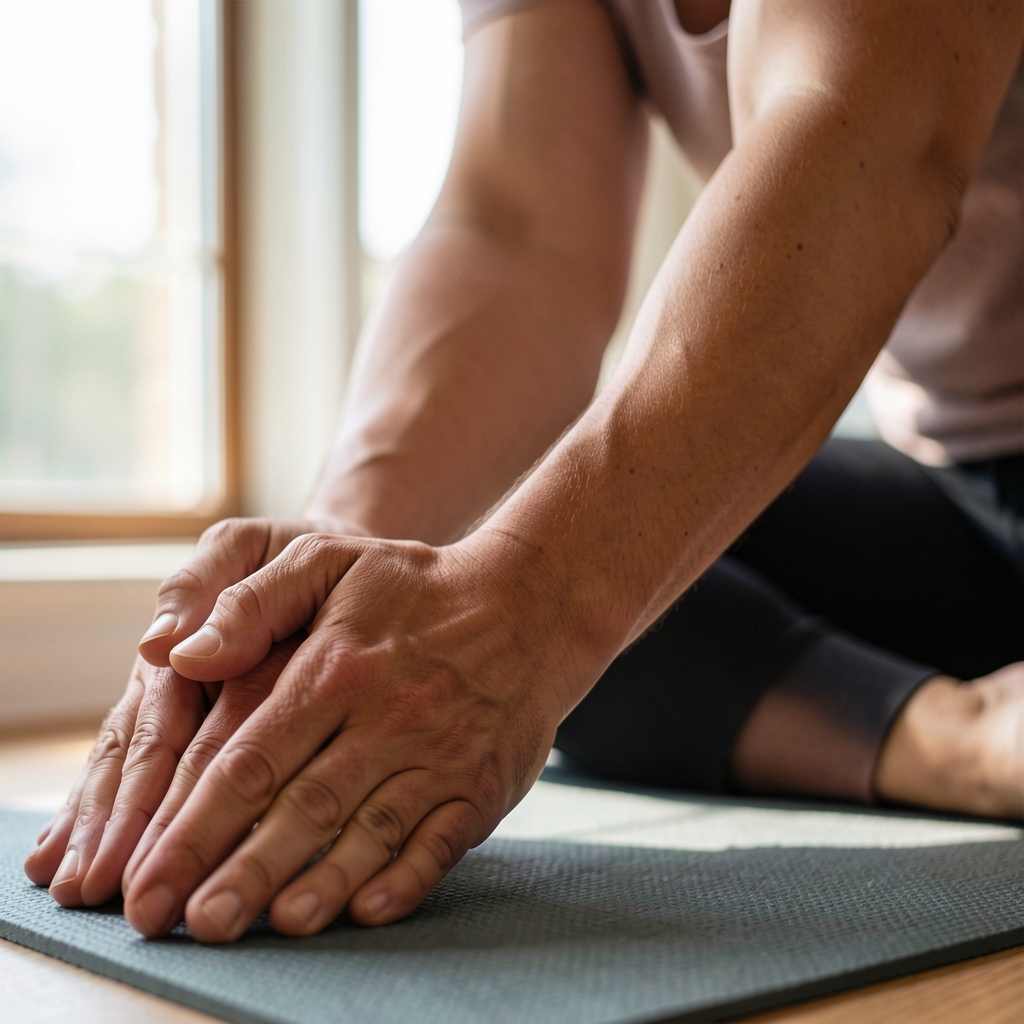
The following observations come from a three-month period of daily hip-opening practice maintained through January to March 2026. The routine consisted of five postures held for two minutes each, practised in the evening after the working day. Total session time: ten to twelve minutes.
Changes became perceptible around the five-week mark, though the nature of the change was not primarily range. What shifted first was sensation: the settled quality of the hip joint during daily movement — walking, climbing stairs, sitting down to work — became noticeably different. The hip felt more available, which is a phenomenological observation rather than a measurable one, but consistent with what other practitioners describe.
Measurable range improvement was present by the end of the third month: seated external rotation — the ability to bring a bent knee toward the floor from a cross-legged position — improved on both sides. The improvement was unequal, which matched the expectation: the right hip, having been tighter initially, showed greater change.
The most consistent finding from this period was one about maintenance: progress made over three months is not retained automatically. One week without the routine produced a noticeable reduction in the settled quality described earlier. Two weeks produced a partial reduction in range. This is the argument, most clearly made by the body itself, for consistency as the primary variable.
Starting Points for a Beginner Hip Routine
For practitioners approaching hip mobility work without prior experience, the sequence below represents an accessible starting point. Each position should be entered slowly and held for ninety seconds to two minutes. Breath should remain slow and continuous. If the breath shortens or holds, the position is too deep — reduce the range until breathing normalises.
A low lunge with the back knee down opens the front of the hip in the back leg. A reclined figure-four, performed on the back with both feet on the floor, opens the outer hip and piriformis without loading the knee. A seated wide-angle forward fold, using a blanket under the hips if needed to allow the pelvis to tilt forward, addresses the inner hip and adductors. Child's pose with knees wide, optionally with a bolster beneath the chest, ends the sequence with a combined hip opener and spinal rest.
These four positions, held consistently, represent a complete entry point. They require only a mat and, optionally, a folded blanket. They can be performed after a working day without additional warm-up. The session length is under ten minutes. The observations documented here suggest that this investment, maintained over weeks, changes the ongoing experience of a seated body in ways that are both measurable and immediately perceptible.