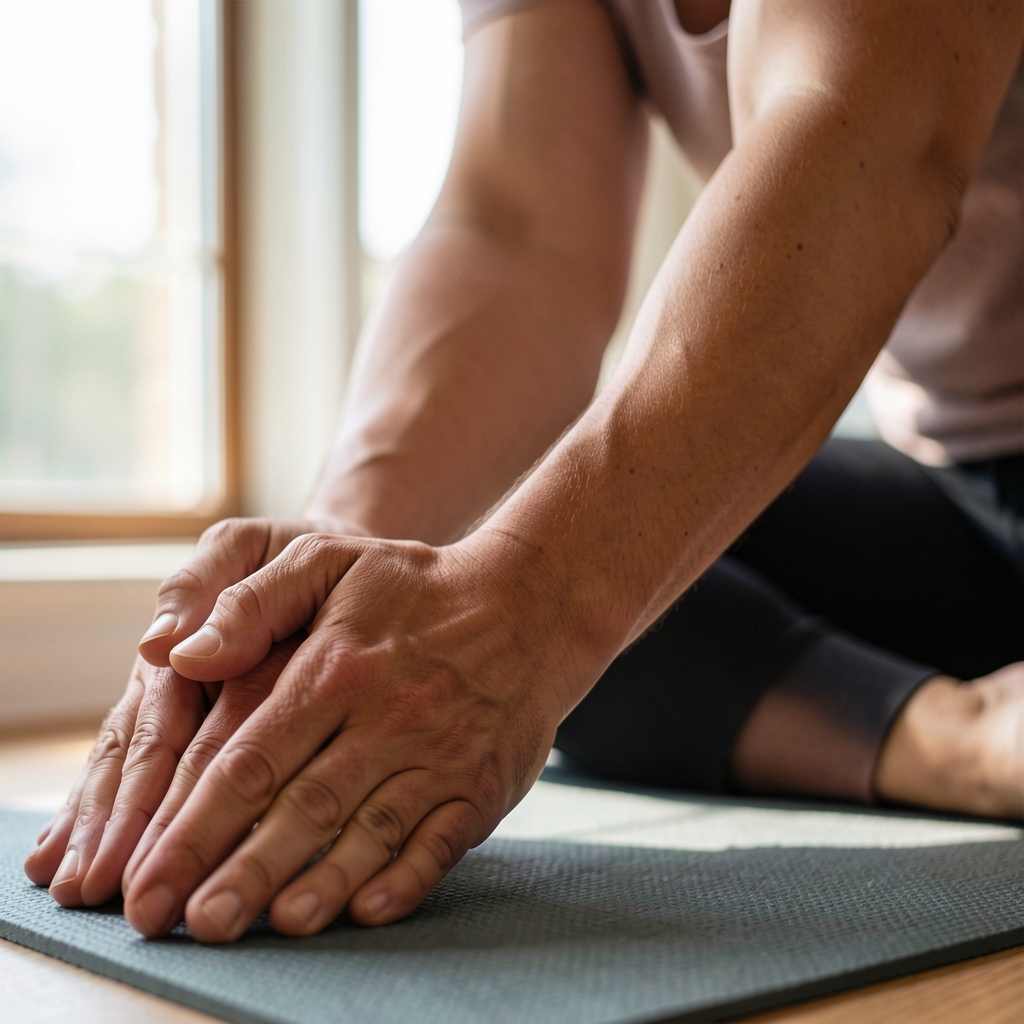
There is a distinct quality of experience that restorative yoga offers which active practices cannot replicate: the encounter with one's own stillness. When the body is supported, warm, and settled into a position it can genuinely rest in, the ordinary noise of physical effort falls away. What remains is the breath. This piece is a record of what that condition — breath and long hold together — can produce.
The Distinction of Restorative Practice
Restorative yoga is sometimes described as passive, a word that undersells what it actually requires. The postures themselves ask very little of the muscular system — that is the point — but the practice asks considerable attention of the practitioner. In the absence of effort, attention becomes the primary instrument.
This is not a universal comfort. Practitioners accustomed to vigorous practice often find early restorative sessions unexpectedly challenging: the mind, habituated to the management of effort, lacks a ready vocabulary for the experience of simply being still. What presents itself in the stillness — a restlessness, a stream of assessment about whether enough is happening — is itself an informative encounter.
With repeated exposure, the restlessness settles. The practitioner begins to find the held pose not as empty time but as a particular quality of occupation — one characterised by a kind of horizontal attention that spreads across the body rather than narrowing to a point of effort. Breath work is the vehicle by which this quality of attention is most reliably accessed.

How Breath Organises a Long Hold
In a held posture of three to five minutes, the breath changes character. The first minute or so is often spent negotiating the position — settling weight, adjusting the angle of a prop, noticing what the body is doing. Breathing during this period tends to be uneven.
As the body settles and the position stabilises, breath naturally lengthens. The exhalation in particular tends to extend — the body recognising, in some functional sense, that the demand has reduced and a longer release is possible. This lengthening of the exhalation is associated with what autonomic research describes as a shift toward the parasympathetic state: reduced heart rate, reduced muscle tone, reduction in the vigilance that the nervous system maintains against unexpected demand.
Deliberately guiding this process — consciously extending the exhalation to match or exceed the inhalation — accelerates the transition. A four-count inhale, six-count exhale, maintained through the middle phase of a long hold, produces a measurable deepening of the rest state. This is not advanced pranayama. It is a basic structuring of the breath that any practitioner can apply from their first restorative session.
Postures That Reward Duration
Not every yoga position rewards a long hold equally. Active postures — those that require significant muscular engagement to maintain — do not have a restorative quality regardless of how long they are held. The postures that genuinely repay duration are those where the body is supported, the muscular demand is low, and the structural position creates a mild, sustainable stretch.
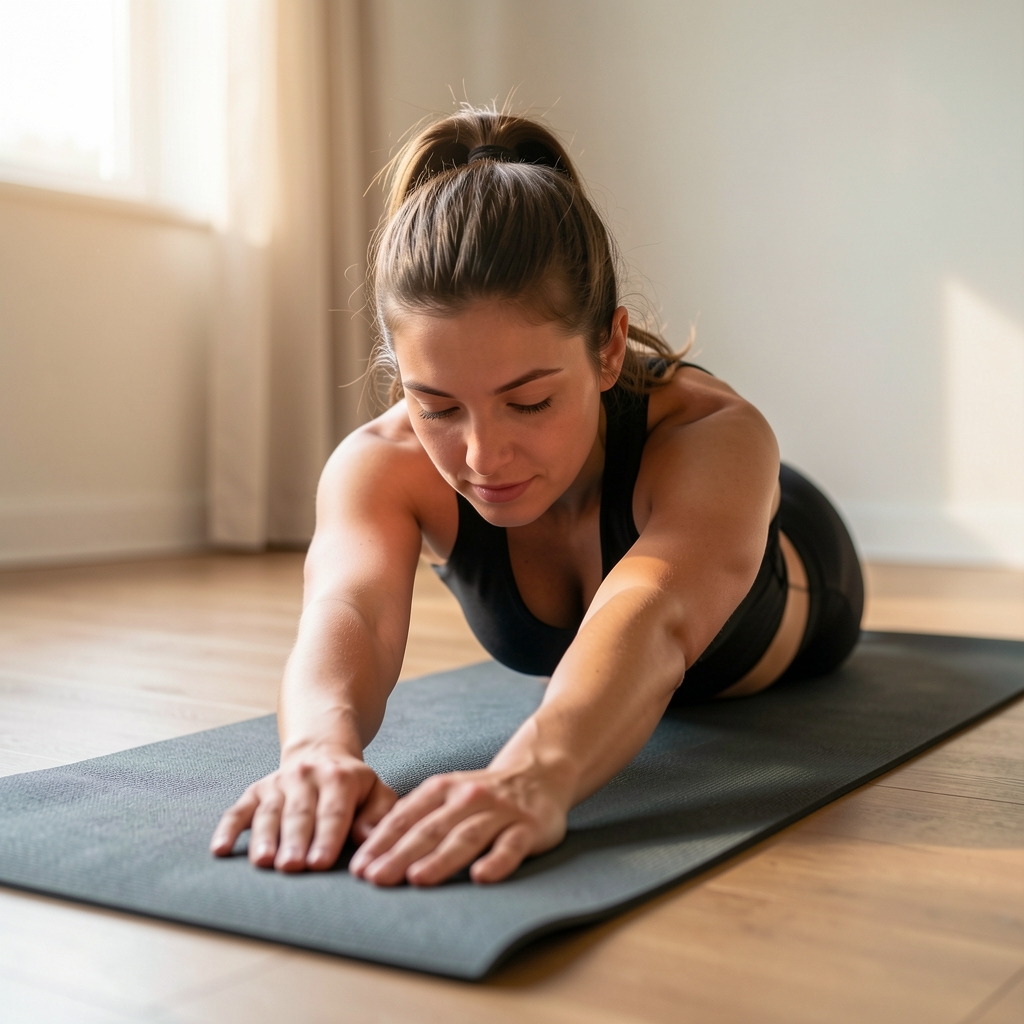
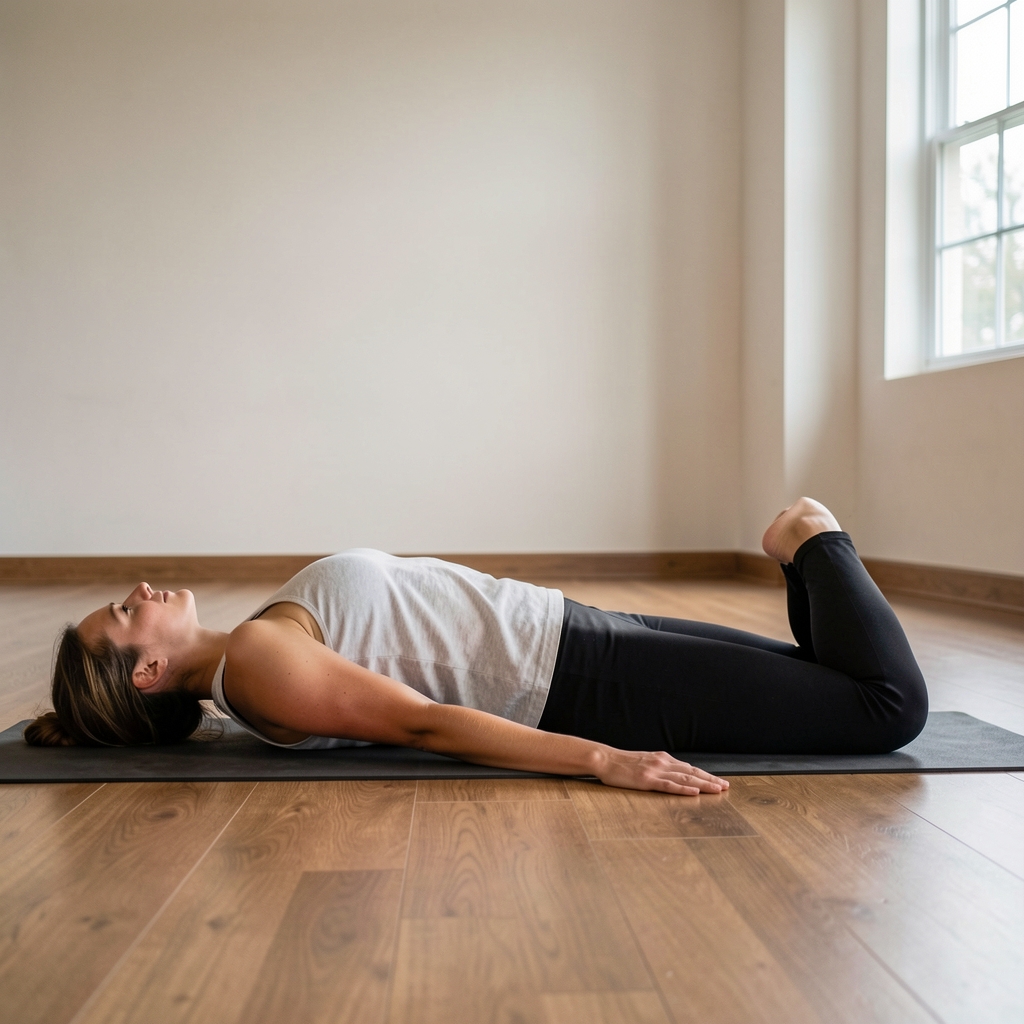
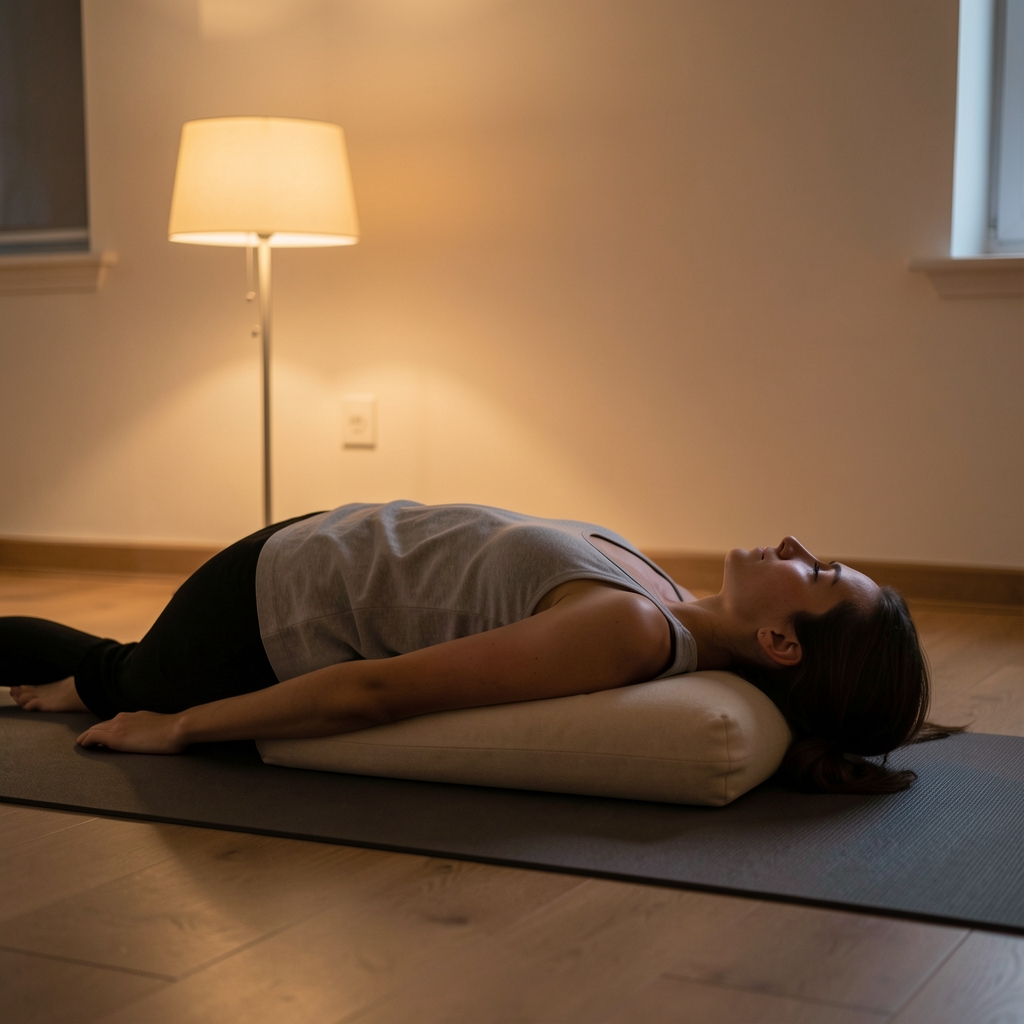
Supta baddha konasana (reclined bound angle) is one of the most documented in this category — the position places the inner hips and groin in a gentle, gravity-assisted stretch while the back is fully supported by the floor. Supported child's pose, with a bolster extending from the pelvis through the torso, works the hips in flexion while allowing the spine and shoulders to release. Constructive rest — simply lying on the back with knees bent — is so low-demand that it is accessible to almost every practitioner and produces the breath conditions described above with minimal preparation.
What these positions share: the weight of the body is managed by the floor and by props rather than by muscular effort. The connective tissue is placed in gentle length. The practitioner has no task except to remain and to breathe. These conditions are sufficient for the practice to occur.
Key Observations — Restorative Practice
- Restorative yoga asks low muscular effort but considerable attentional presence
- Breath naturally lengthens in a supported held pose — the exhalation extends first
- Deliberately guiding the exhalation longer than the inhalation deepens rest quality
- Postures reward duration when structural support removes the need for muscular holding
- A single twenty-minute restorative session produces different conditions than ten minutes of flow
Placing Restorative Work in a Broader Routine
Restorative yoga is frequently positioned as a recovery practice — something used after vigorous sessions or during periods of reduced energy. This framing is accurate but incomplete. It suggests that restorative practice is reactive, deployed in response to depletion. The practitioners who describe the greatest benefit from restorative work tend to describe it as a proactive daily practice rather than a corrective one.
A twenty-minute restorative sequence before sleep, or at the transition point between the working day and the evening, occupies the same daily consistency principle that applies to any flexibility or movement routine. The tissue changes that extended holding produces require repeated exposure to accumulate. The attentional quality that stillness develops — the capacity to remain with sensation without immediately responding to it — is also a training adaptation that accrues with regular practice.
In this light, the relationship between breath work and the long hold is not simply a technique for deepening a pose. It is a practice structure that develops the practitioner's capacity for the particular attention that stillness requires. That capacity, once developed, is available in active practice as well: the same quality of breath awareness that extends the exhalation in a long restorative hold is the quality that monitors breath in a difficult standing balance.
The argument for including restorative practice in a balanced movement routine is not that it provides an alternative to active practice. It is that the two forms of practice develop related but distinct capacities — and that a routine composed of both produces a more complete quality of body awareness than either provides alone. Stillness, attended to with care, teaches something that motion cannot reach.